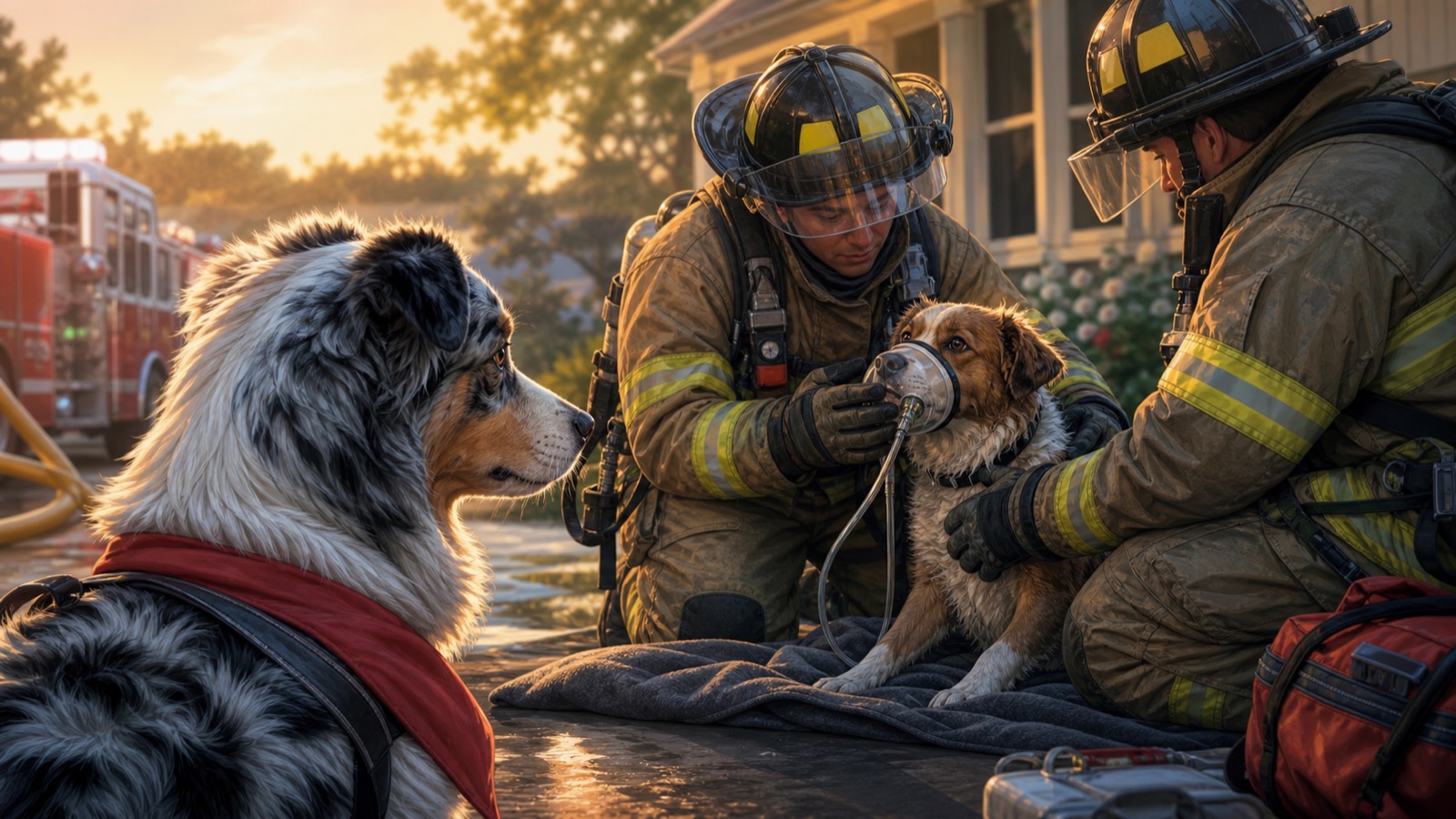
Max here with a serious fire-safety report: getting a dog out of a burning building is only the first step. Smoke can injure the lungs and deprive the body of oxygen even when there are no visible burns. Any enclosed-space smoke exposure, or any related symptoms, needs urgent veterinary attention.
The basement rescue in North Carolina
WBTV reported that firefighters found a dog unconscious in the basement during a major house fire in Cabarrus County, North Carolina. Crews brought the dog outside and reportedly worked for about 20 minutes with a pet oxygen mask before the dog regained consciousness.
That reported rescue illustrates the value of trained responders and pet oxygen equipment. It should not be treated as a home-treatment guide. During a fire, occupants should evacuate and leave rescue operations to firefighters.
Why smoke exposure can be deceptive
House-fire smoke is more than dirty air. It may contain carbon monoxide, hot gases, particles and irritating or toxic chemicals released by burning materials. Carbon monoxide interferes with the blood’s ability to carry oxygen. Heat and irritants can injure the mouth, eyes and airways.
A dog can have serious inhalation injury without dramatic burns or soot on the coat. The University of Illinois College of Veterinary Medicine warns that breathing problems may worsen after the pet initially appears stable, especially during the first 24 hours. Veterinary references also note that some airway and lung changes can be delayed even longer.
What to do during a house fire
- Get people out and call emergency services. Do not delay your escape to search rooms filled with smoke.
- Take pets only when they are immediately accessible and the exit remains safe. Use a leash or carrier if it is within reach, but never block your own escape.
- Never re-enter a burning or smoke-filled building. Tell firefighters how many pets are inside, what kinds of animals they are, and their usual hiding or sleeping places.
- Keep rescued pets in fresh air and away from activity. Allow trained responders to provide oxygen or other first aid. Do not attempt improvised oxygen delivery or apply creams and medications.
- Arrange immediate veterinary evaluation after any enclosed-space smoke exposure or if symptoms appear. Call an emergency animal hospital and explain the fire, length of possible exposure, whether the pet lost consciousness and any signs you see. A pet can worsen after initially looking normal.
Smoke-inhalation warning signs
Seek emergency veterinary care for any smoke-exposed pet, especially when you notice:
- Coughing, gagging or noisy breathing
- Fast, shallow, labored or open-mouth breathing
- Soot or dark material around the nose or mouth
- Burns or swelling involving the face, lips, tongue or mouth
- Squinting, red eyes or facial swelling
- Weakness, wobbling, agitation or unusual sleepiness
- Confusion, poor responsiveness, seizures or collapse
Do not use normal-looking gums or a home pulse-oximeter reading to rule out carbon monoxide exposure. Veterinary diagnostic equipment and professional evaluation are needed.
Prepare pets before a fire happens
- Install and maintain smoke alarms on every level and near sleeping areas. Consider monitored alarms that can summon help when nobody is home.
- Practice two exit routes and include calm leash or carrier loading in household drills.
- Keep leashes, carriers and a portable pet emergency kit close to an exit.
- Assign responsibility for each pet, while agreeing that nobody will re-enter a dangerous building.
- Learn where pets tend to hide when frightened and tell household members.
- Place an accurate pet-alert decal where responders can see it. Mark it evacuated when all pets are safely out, if time allows.
- Keep identification and microchip registration current in case a pet escapes during evacuation.
- Reduce ignition hazards: protect stove controls, secure loose electrical cords, use fireplace screens, and never leave pets unattended around candles or open flames.
- Save the address and phone number of a nearby emergency animal hospital.
Max’s practical takeaway
During a fire, evacuate, call for help and never go back inside. Give responders an accurate pet count and likely hiding places. Once a dog is out, any enclosed-space smoke exposure or related symptoms warrants urgent veterinary care, because dangerous breathing problems can be delayed.
This article provides general education and does not replace emergency or veterinary instructions. In a fire, follow local emergency services. For smoke exposure, contact an emergency veterinary hospital promptly.
Browse more dog care and safety guides.